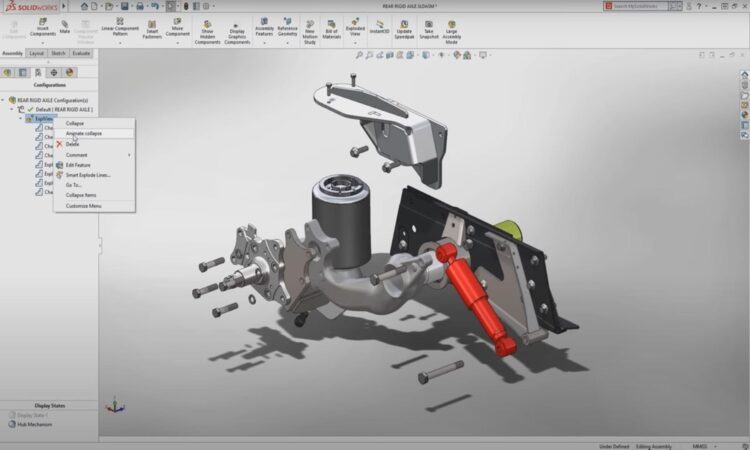
Completing a SolidWorks course can open the door to a wide range of career paths in engineering, design, and manufacturing. As SolidWorks continues to be a leading CAD platform across industries, professionals with strong skills in this software are in high demand. Whether you are a student or a working professional, mastering SolidWorks can significantly expand your career options.
Mechanical Design Engineer
One of the most common roles after completing a SolidWorks course is a mechanical design engineer. In this position, you’ll be responsible for creating 3D models, developing product concepts, and preparing technical drawings.
SolidWorks allows engineers to design complex components with precision, making it an essential tool in industries such as automotive, aerospace, and industrial manufacturing.
CAD Designer or Draftsperson
A CAD designer focuses on creating detailed models and drawings based on project requirements. This role is ideal for those who enjoy working closely with design specifications and translating ideas into technical visuals.
With SolidWorks expertise, CAD designers can produce accurate and efficient designs, making them valuable assets to engineering teams.
Product Development Engineer
Product development engineers oversee the entire lifecycle of a product-from concept to production. Using SolidWorks, they can design, test, and refine products to meet performance and quality standards.
A SolidWorks course equips you with the skills needed to handle design iterations, simulations, and collaboration across departments.
Design Engineer (Specialized Fields)
SolidWorks is used in various specialized fields, including sheet metal design, plastics, and electrical systems. Engineers who focus on these areas can build niche expertise and work on highly technical projects.
This specialization can lead to unique opportunities and career growth in specific industries.
Simulation and Analysis Engineer
For those interested in testing and optimization, simulation roles are a great option. SolidWorks includes tools that allow engineers to analyze stress, motion, and thermal behavior.
Professionals trained through a SolidWorks course can use these features to improve product performance and reduce design risks.
Freelance and Consulting Opportunities
SolidWorks skills also open doors to freelance work and consulting. Many businesses look for skilled designers to handle short-term projects, prototype development, or design improvements.
This flexibility allows professionals to work independently or build their own client base.
Final Thoughts
Completing a SolidWorks course is more than just learning software-it’s a gateway to diverse and rewarding career opportunities. With strong SolidWorks skills, you can pursue roles in design, development, simulation, and beyond. As industries continue to rely on digital design tools, the demand for SolidWorks professionals will only continue to grow.